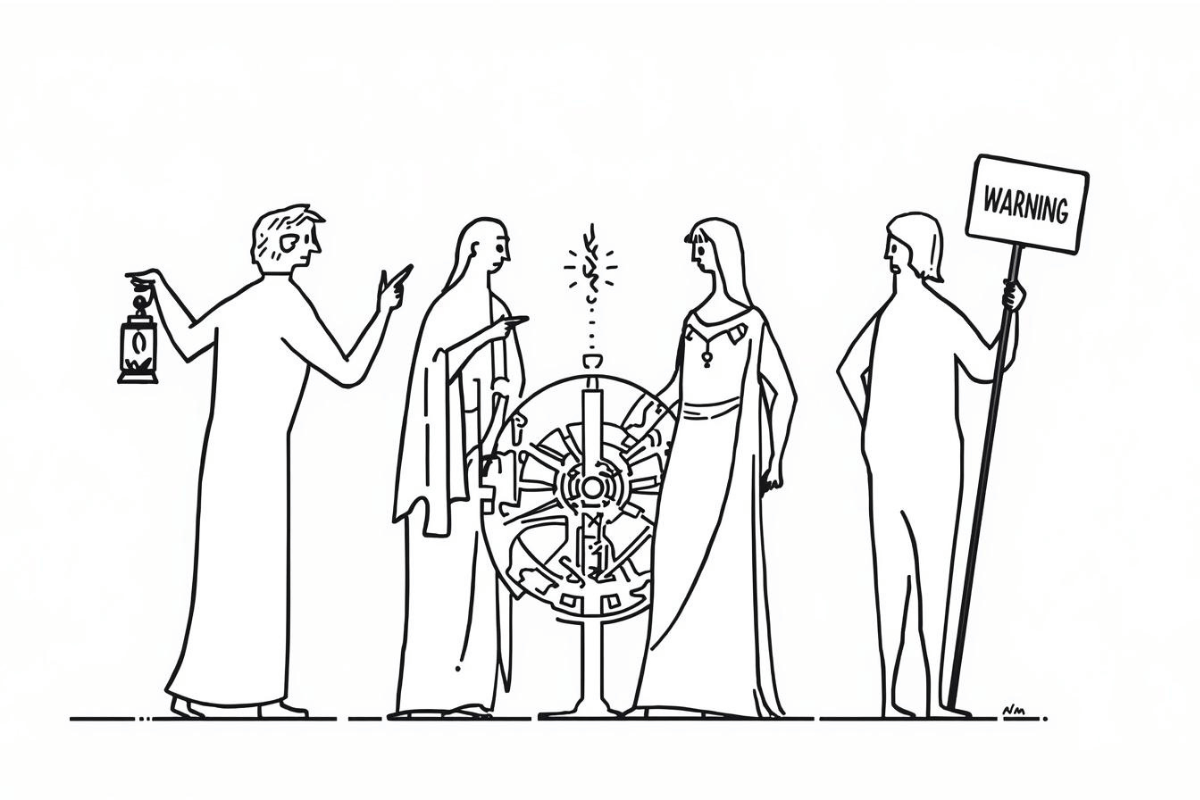
Why Builders Are Usually Caught Off Guard When Platforms Change
A guy named Fred kept the accounts for his small business stored in a system he had used for years. It wasn’t fancy, but it worked. He knew where everything was. He trusted it. It was part of his daily routine.
Then one day, the way he accessed those accounts changed.
Nothing broke. The system didn’t disappear. But the rules around his access shifted. New steps. New requirements. Things that had once been simple were now buried under process and permission.
Fred wasn’t frustrated because the system failed — he was frustrated because he no longer controlled how he reached his own information. And when he finally did get locked out for good, he had to pay professional support just to recover what had always been his.
That was the moment he understood something most builders don’t see until it happens to them:
what you place inside a system is not the same as owning it.
“Access is not ownership.”
What a Permission-Based System Really Is
A permission-based system is any platform, service, or tool where you do not control access, rules, or continuity. You are allowed to operate there, but you do not govern it.
That includes social platforms, marketplaces, cloud tools, and most modern digital services. You can build inside them. You can succeed inside them. But the ground you stand on belongs to someone else.
Because it does, that ground will never be permanent.
“You may work there, but you do not decide how long it stays still.”
Why These Systems Must Change

Permission-based systems are built to serve themselves first. That is not greed. It is structure.
They must respond to scale, law, economics, security, competition, and survival. A system that does not change will eventually fail, and no platform is designed to choose your stability over its own survival. This is why your business should not exist entirely within a platform.
So change is not betrayal. It is maintenance.
“A system that never changes is a system preparing to disappear.”
Why Builders Are Surprised When They Do
Most builders treat platforms as places, not systems.
A place feels solid. A system is always moving. When builders mistake one for the other, they expect stillness where motion is guaranteed. That is where frustration begins.
They say the platform “turned on them.” In truth, the platform never promised to stand still.
“Surprise comes from mistaking motion for malice.”
Why Stability and Permission Do Not Coexist
True stability comes from ownership. Permission, by definition, means someone else controls continuity.
You cannot own ground that must ask permission to exist. That does not mean permission-based systems are useless. It means they are meant for movement, not permanence.
Confusing these roles is what causes so much quiet collapse.
“You cannot build a house on a road and expect it not to move.”
What Happens When You Understand This
When builders understand the nature of permission-based systems, something important changes.
They stop asking platforms to behave like homes. They stop treating tools like foundations. They begin using systems as crossings, not camps.
And with that shift, frustration gives way to strategy.
“Clarity does not stop motion — it tells you where not to settle.”
Why This Is Not a Failure
Change inside permission-based systems is not a sign of decline. It is a sign that the system is doing exactly what it was designed to do.
Failure only happens when builders mistake movement for stability and place their ground where none was offered.
Understanding this frees you from taking system behavior personally.
“A moving river is not broken — it is simply not a bridge.”
How Builders Stay Grounded Inside Moving Systems
Builders who last do not fight system movement. They build around it.
They own what does not move.
They place permanence where permission is not required.
They cross systems instead of living inside them.
That is not resistance. That is alignment.
“You don’t stop the current — you choose where to stand.”
Knight’s Take
“Permission-based systems are not enemies.
They are roads, not homes.
Use them to travel.
Build where the ground holds.
That is how work survives motion without being consumed by it.”
This idea fits into the Knight’s approach to building work that lasts.
→ Read: The Knight’s 8-Step Framework For Building An Online Business